07 December 2010
Nature-inspired flight
In a new issue of the journal Bioinspiration & Biomimntics, a special section is devoted to nature-inspired flight. There is an emphasis on MAVs of various sorts, but also purely animal flight papers have been included. The issue has been edited by two well-known figures in our field, David Lentink and Andy Biewener. The latter is handling most of our mansucripts submitted to JEB. The two editors write an introductory essay, following by the original papers. Have a look here. There will be reason to return to these papers.

29 November 2010
Operation snow storm: lab meeting

During the lab meeting today (29 November 2010) the AFL-members that made it to the Ecology Building, in spite of the snow-storm, discussed the recent paper about “The effect of body size on the wing movements of pteropodid bats, with insights into thrust and lift production”. This paper, from the Brown University Group, reports on kinematic parameters studied in six species of bats. The paper concludes that “the ways that bats modulate their wing kinematics to produce thrust and lift over the course of a wing beat cycle are independent of body size”. How convenient if this proves to be true! The authors however thinks that small bats, such as Phyllostomids, may differ from the medium to large sized bats studied here. One reason put forward could be that small bats, using a leading edge vortex, are more insect-like in their use of aerodynamic mechanism, and therefore different from other bats. It will be interesting to find out of smaller species of bats differ in flight.
04 October 2010
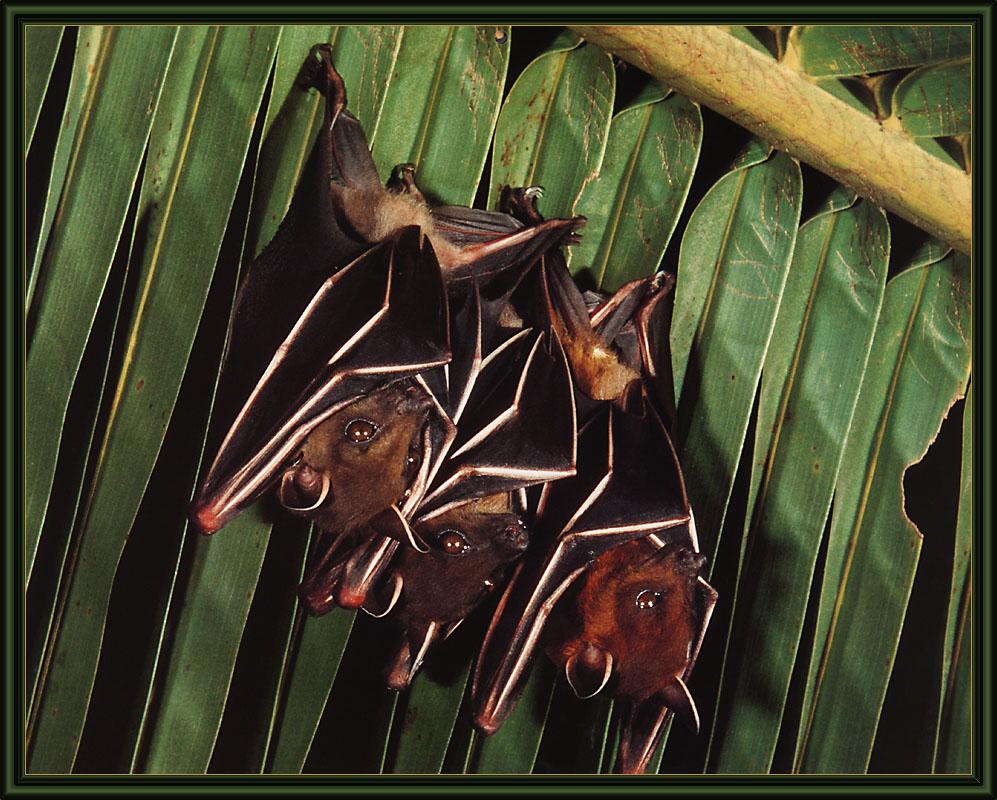
A new paper on bat flight has now been published by the Brown University group in the Journal of Experimental Biology (Hubel et al. 2010), where they report on the wake dynamics in a medium sized bat, Cynopterus brachyotis, when it is flying at intermediate speeds (5 and 6.7 m/s). The wake is very similar to that found for other bat species studied in Lund, which lend support for the notion of the generality of these results. Hence, it is very nice to see results of bat aerodynamics being confirmed by anther lab. Since papers of bat flight are still quite rare, this paper will be the focus of our next lab meeting, which will be Monday 11 October, 2010.
13 September 2010
Melissa is back in the US

As the remaining AFL crue has noticed Melissa Bowlin has left Lund after 2 years here as Marie Curie postdoc fellow. It has been two years of intense work, including wind tunnel experiments, writing of book chapters, conferences and symposia. Melissa left with lots of data still to be analyzed and published, perhaps most notably about the effect of moult gaps on flight performance in passerine birds. Melissa has now taken up a new position as assistant professor at Dearborn, Detroit, where she is teaching animal physiology alongside her own research. We wish her all the success in her new position in the US, but also that we will remain in close contact in the future.
03 September 2010
MAVs navigating without GPS
 Engineers at MIT has built a MAV that is able to navigate inside a complicated environment, where GPS navigation is denied. The vehicle is perhaps mainly interesting for its navigations skills rather than it's flight performance. The MAV has a laser scanning the environment to build up an image about the surrounding topology. At the recent International Bat Research Conference in Prague, there were talks about using sonar systems similar to those of bats to navigate the environment. The real challenge will be to combine any of these navigation based systems with a MAV that uses flapping flight, and flies like a bat or an insect. A film showing the MAV flying indoors can be seen by clicking here. The accompanying paper is not very new, published in Science in late 2009.
24 August 2010
Animal Flight Lab on Bat Conference, Prague


Members of the Animal Flight Lab are currently attending the 15th International Bat Research Conference in Prague. This is the main outlet for bat science, being the biggest assemblage of bat scientists ever at 550 individuals. In the afternoon on Monday (23 August) we had the flight symposium, organised by Anders H and Sharon Swartz, Brown University. Members of both the Lund and Brown labs gave excellent presentations, showing how kinematics and PIV data could be used to get lots of information (Florian Muijres and Rhea von Busse). Other talks were on flight mechanical constraints on bat size (Ulla Lindhe Norberg), context-dependent flight speeds (Marc Holderied), energetics by Na-Bicarbonate isotope analysis (Christian Voigt), and muscle and tendon morphology in the wings (Sharon Swartz). In the evening, the whole group of speakers went in to Prague for a excellent dinner at a restaurant (Café du Paris, see picture). After dinner we strolled through central Prague and into the old city. Today (Tuesday, 24 August) we have enjoyed many more interesting talks, and soon we will attend the poster session, where Melanie Stuiver will present her poster on the bat robot (RoBat).
18 August 2010
News on power curves
 Summer is coming to an end and we have an autumn of activities to look forward to. As a starter, I would like to recommend a series of papers just out in the J Exp Biol, in which the mechanical power was measured in cockatiels. In three papers the researchers measured muscle work, compared muscle work with output from a aerodynamic model, and finally measure the flight metabolic rate to get conversion efficiency. The papers discuss all the difficulties and pitfalls, we are so well aware of, but they constitute a good and recent update on the subject. It is concluded that power consumption during flight must come from more than just the main flight muscles (Pectoralis major/supracoracoideus), otherwise the efficiency must be extremely low in the order of 10%, or so.
Subscribe to:
Posts (Atom)