 In a new study, published on-line in the Journal of the Royal Society Interface, the Brown University group report on wake measurements from the Brazilian free-tailed bat (Tadarida brasiliensis), using the PIV technique in a wind tunnel (Hubel et al.). This species differs in morphology and ecology from previously studied bat species, having higher aspect ratio wings and mainly flying in he open airspace when feeding on insects. So, does that make it's wake and aerodynamic properties different from other bats? The answer is "no"! Even if the authors argue that the Brazilian free-tailed bat has a wake very similar to that of the swift (Apus apus), it shows all of the characteristic wake features previously observed in bats. These include wing-root vortices and revers-vortices shed at the end of the upstroke. According to the authors when comparing the new data with previously studied bats: "the structure of their wakes is remarkably similar". Hence, it seems as if the notion of a typical "bat wake" receives support from this new study. Further studies will hopefully answer what features of the bat design make bat wakes different from those of birds.
Showing posts with label kinematics. Show all posts
Showing posts with label kinematics. Show all posts
06 March 2012
New wake study of a bat from Brown university
In a new study, published on-line in the Journal of the Royal Society Interface, the Brown University group report on wake measurements from the Brazilian free-tailed bat (Tadarida brasiliensis), using the PIV technique in a wind tunnel (Hubel et al.). This species differs in morphology and ecology from previously studied bat species, having higher aspect ratio wings and mainly flying in he open airspace when feeding on insects. So, does that make it's wake and aerodynamic properties different from other bats? The answer is "no"! Even if the authors argue that the Brazilian free-tailed bat has a wake very similar to that of the swift (Apus apus), it shows all of the characteristic wake features previously observed in bats. These include wing-root vortices and revers-vortices shed at the end of the upstroke. According to the authors when comparing the new data with previously studied bats: "the structure of their wakes is remarkably similar". Hence, it seems as if the notion of a typical "bat wake" receives support from this new study. Further studies will hopefully answer what features of the bat design make bat wakes different from those of birds.

29 November 2010
Operation snow storm: lab meeting

During the lab meeting today (29 November 2010) the AFL-members that made it to the Ecology Building, in spite of the snow-storm, discussed the recent paper about “The effect of body size on the wing movements of pteropodid bats, with insights into thrust and lift production”. This paper, from the Brown University Group, reports on kinematic parameters studied in six species of bats. The paper concludes that “the ways that bats modulate their wing kinematics to produce thrust and lift over the course of a wing beat cycle are independent of body size”. How convenient if this proves to be true! The authors however thinks that small bats, such as Phyllostomids, may differ from the medium to large sized bats studied here. One reason put forward could be that small bats, using a leading edge vortex, are more insect-like in their use of aerodynamic mechanism, and therefore different from other bats. It will be interesting to find out of smaller species of bats differ in flight.
04 October 2010
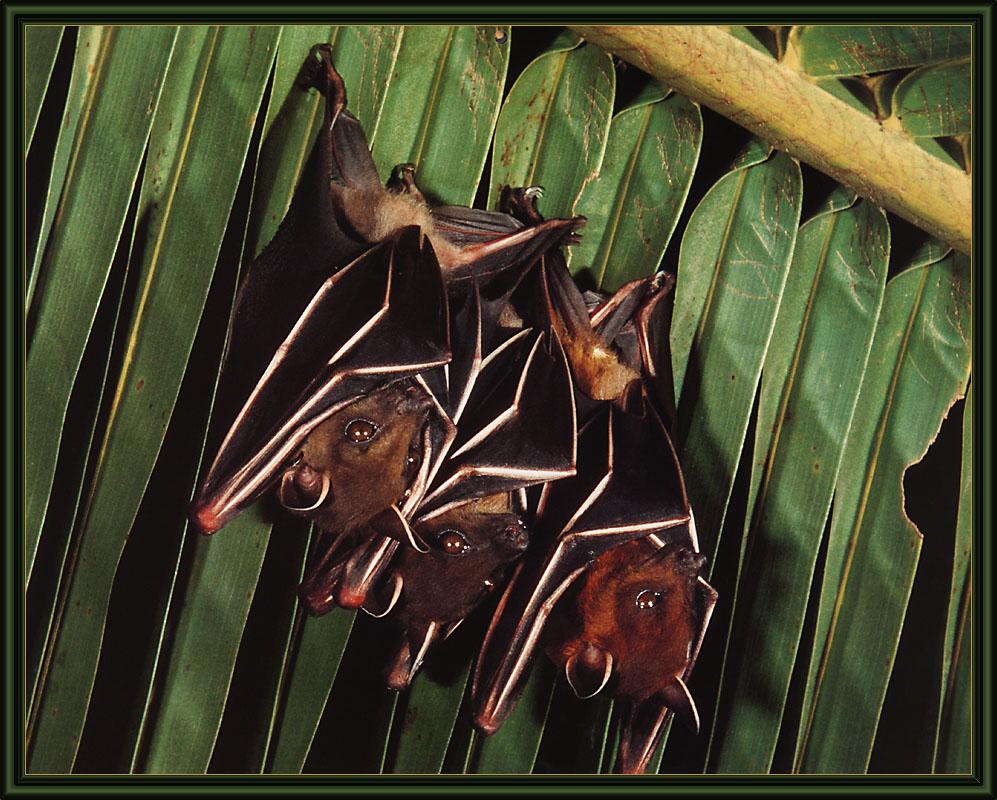
A new paper on bat flight has now been published by the Brown University group in the Journal of Experimental Biology (Hubel et al. 2010), where they report on the wake dynamics in a medium sized bat, Cynopterus brachyotis, when it is flying at intermediate speeds (5 and 6.7 m/s). The wake is very similar to that found for other bat species studied in Lund, which lend support for the notion of the generality of these results. Hence, it is very nice to see results of bat aerodynamics being confirmed by anther lab. Since papers of bat flight are still quite rare, this paper will be the focus of our next lab meeting, which will be Monday 11 October, 2010.
Subscribe to:
Posts (Atom)